Home › Oral Health
Dental Probiotics & Oral Health Supplements: An Evidence Guide
Category guide · Updated July 2026
"Dental probiotics" went from a niche idea to one of the most-advertised supplement categories in the U.S. The research behind the concept is real but young — and the gap between "promising early studies" and what the ads claim is where buyers get burned.
Oral health in the U.S.: the real numbers
Gum disease is that common — and it's also largely manageable with professional cleaning and daily hygiene. Any supplement in this category has to be judged as an addition to that, never a substitute. That's not our opinion; it's how the studies themselves were designed.
What dental probiotics are (and the strains that matter)
Oral probiotics are lozenges or chewables built around strains selected to colonize the mouth. The names to look for on a label:
- Streptococcus salivarius K12 — the most-studied oral strain, mainly for bad breath and throat health.
- S. salivarius M18 — studied for plaque scores.
- Lactobacillus reuteri — small trials as an adjunct to professional cleaning for gum inflammation.
The honest summary of this research: promising, early, small. Trials exist, several show measurable effects, and none of them justify words like "rebuild," "regrow," or "repair." A trustworthy product names its exact strains and CFU count; "proprietary probiotic blend" tells you nothing you can verify.
What to check on any oral supplement label
- Named strains with CFU counts. "3.5 billion CFU of L. reuteri" is checkable against studies. "Probiotic complex" is not.
- Delivery format. Oral colonization needs contact time — which is why studies use lozenges and slow-dissolve tablets, not swallowed capsules.
- Claims that stay inside the evidence. "Supports gum health" is a structure claim. "Regrows enamel" or "reverses decay" is fiction — enamel doesn't regenerate.
- Guarantee terms and seller. Days, conditions, return shipping — and whether the listing you're on is actually the manufacturer's. Marketplace copies of advertised formulas usually aren't covered by the official guarantee.
Reviews in this category
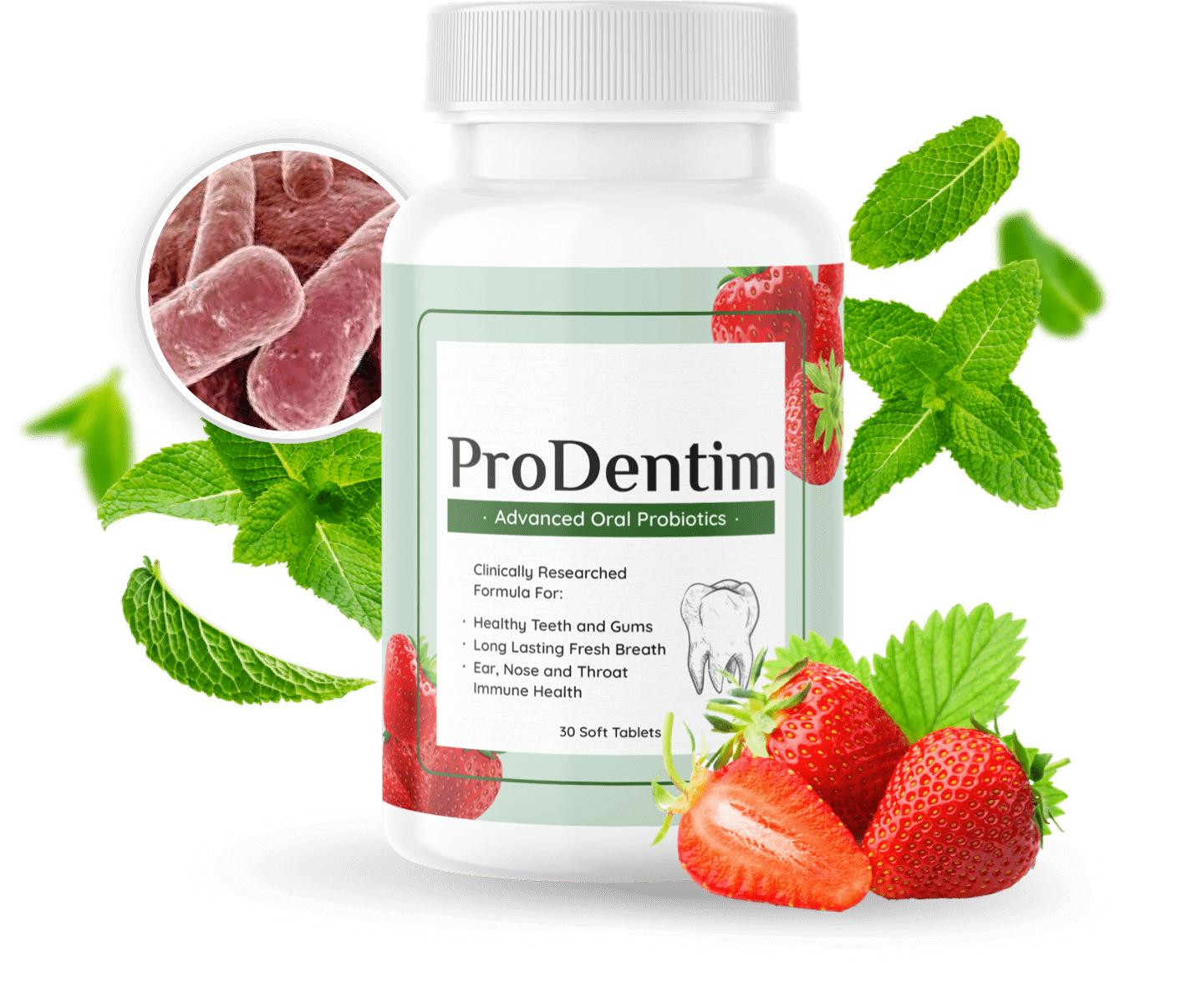
ProDentim — review in progress
One of the most-searched supplement brands in the U.S. right now. We're transcribing the label, checking each strain and CFU count against the research above, and recording real pricing and refund terms.
Frequently asked questions
What is a dental probiotic?
A supplement — usually a lozenge or chewable — containing bacterial strains selected to colonize the mouth rather than the gut, most commonly S. salivarius K12/M18 and L. reuteri. The idea is to crowd out bacteria associated with bad breath, plaque, and gum inflammation.
Do dental probiotics replace brushing or the dentist?
No. The research tests them as an add-on to normal hygiene, never as a replacement. Untreated cavities and periodontal disease are progressive — no supplement reverses a cavity.
Which strains actually have research?
S. salivarius K12 (bad breath, throat), S. salivarius M18 (plaque), and L. reuteri (gum inflammation, as an adjunct to cleaning). Evidence is promising but early. A quality label names the exact strain and CFU count.